Book review

Swarms of pestilence

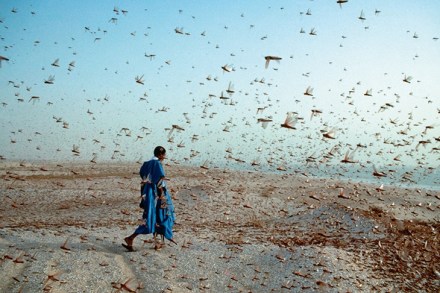
Carried on monsoon winds across the Red Sea, vast swarms of desert locusts have posed a deadly threat to the people of the Horn of Africa for millennia. One swarm can number billions of insects, cover a 1,000-square-mile area and consume 30–40,000 tonnes of food per day — all of which makes the desert locust well deserving of its collective noun ‘plague’. Much brain-power has been dedicated to the controlling of these insects, whose swarms can lead, and have led to, famines. Methods of control have included the digging of trenches to catch hoppers (juvenile locusts) and, later, the aerial spraying of chemical and fungal insecticides. In the early 1950s,

The message in the blossom

Between 1639 and 1853, seeds and scions of flowering cherry trees travelled across Japan to Edo (present-day Tokyo). Each came from the most beautiful specimens of varieties of tree from the different principalities of Japan. From mountainous regions came the light pink yama-zakura; from the chilly climates of Hokkaido and northern Honshu came the crimson Ohyama-zakura; Mame-zakura, with their neat skirt-like white petals, came from Mount Fuji; and the rainy Izu islands produced Oshima cherries, with large, white flowers. This was an era of peace. For centuries before, the various families of Japan had fought for power. Now, they all answered to a single family, the Tokugawa family, in Edo,

Making Brexit thrilling

The long gestation period of Brexit has allowed authors to plan and write and publish novels in time for the big day. Alan Judd’s Accidental Agent (Simon & Schuster, £12.99) is a spy thriller set during the EU negotiations. Charles Thoroughgood is the head of MI6. The secret service is forbidden from spying on the EU, but when an EU official volunteers information about the negotiations, it seems too good an opportunity to miss. The trouble is, the mole — known only by the code name Timber Wolf — might not actually be real. Thoroughgood investigates the veracity of the source, taking the place of Timber Wolf’s usual contact, and

The voices of the victims

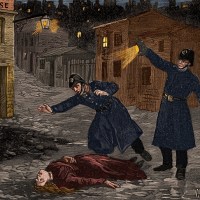
Before she was the subject of true-crime mythologising, Catherine Eddowes made her living from it, selling ballads based on real-life murders to avid Victorian audiences. The historian Hallie Rubenhold suggests that Eddowes may have written them too; unusually for a working-class woman, she was literate. Still, the possible example of her work that Rubenhold reproduces in The Five shows no sign that female authorship led to incipient feminist consciousness. Typically for the 19th century (and still often seen in reporting today), Verses on the Awful Execution of Charles Christopher Robinson, for the Murder of his Sweetheart, Harriet Segar focuses attention on the femicidal man, investing sympathy in him rather than

Writing as exorcism

Why are people interested in their past? One possible reason is that you can interact with it, recruiting it as an agent of the present and the future. Siri Hustvedt’s novel, masked as a memoir, suggests you should rely not so much on your recollection of particular events as on your ability to interpret them, which can produce something truer than bare facts. ‘Yes, it is a memoir,’ the narrator says, ‘but memory is not fixed… memory and imagination are a single faculty.’  The outcome of Hustvedt’s attempts to commit the past to the page depends on memory acting as her editor. The book is centred on one year in

Conversations between truth and power

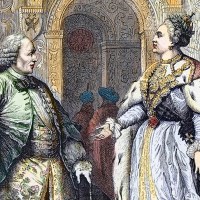
Denis Diderot (1713–84) is the least commemorated of the philosophes. Calls for his remains to be moved to the Panthéon on the tricentenary of his birth in 2013 were ignored. He has not taken his place alongside Rousseau and Voltaire in the Parisian vaults of fame, even though he was no less radical or progressive. Instead, his name has been given to a metro stop in the 12th arrondissement: Reuilly-Diderot. Even here, he comes second, tacked on by a hyphen, one of history’s and philosophy’s also-rans. The injustice done to Diderot can partly be explained by the fact that he was a collaborative writer and thinker. He devoted decades of

The strange birth of liberal England

If the road to hell is paved with good intentions, the one to heaven may be surfaced with bad ones. We like to imagine otherwise. We are rational, sensible, moral creatures. If we only think scientifically and apply ourselves, we can achieve anything. Hence the recent secular historiography of the Enlightenment and modern world, which, at least according to Steven Pinker’s latest offering, can be explained straightforwardly by the emergence of science, reason and humanism. Alas, history is not so neat, as real historians know. Good things often come from bad intentions. That is the argument of James Simpson, a medieval historian who has turned his attention to the Reformation

Running on empty, and on and on

Hunter Stockton Thompson blazed across the republic of American arts and letters for too short a time. When in February 2005 Thompson, 67, killed himself with a .45 at home in Woody Creek, Colorado, freethinkers and lovers of his savage, beautiful words grieved the world over — and we still do. Thompson was a Southern boy from Louisville, Kentucky, whence comes F. Scott Fitzgerald’s Daisy Fay, later Buchanan. After a sally into higher education and military service, both marked by varying degrees of brilliance and insubordination, Thompson moved to New York City and worked as a reporter. His specialty was, initially, sport, and his forte was observation. He was 21

Mocking the mandarins

Stendhal likened politics in literature to a pistol-shot in a concert: crude, but compelling. When that politics largely consists of machinations within the European Commission in Brussels, readers may fear that the writer who pulls the trigger wields no more than a pop-gun. Yet the Austrian author Robert Menasse has scoured these corridors of power — and powerlessness — to furnish a thoroughly entertaining fiction that serves both as a sort of campus satire and a novel of ideas. For sure, Menasse has an agenda. His nicest characters tend to believe in the ‘post-national democracy’ of EU integration. Still, their efforts to sell the Brussels system as ‘the moral of

Dialogue with the dead

When Yiyun Li first became a writer, she decided that she would leave behind her native language, Chinese, and never write or be published in it again. She has described this decision as being like a suicide. In languages, she suggests, we form our identities. Leaving one behind is a death of a version of our self; and starting afresh in a new language is a kind of rebirth. In Where Reasons End, the English language, in which Li has made her name as a Chinese-American author, has transformed into something the narrator can no longer depend upon. She stumbles over words, recognising that she no longer knows, or perhaps

A man of great magnetism

Chances are, you are reading these words in some room or other. Build a wall down the middle of it, and in the middle of the wall, insert a tiny shutter. Conjure up a tiny critter who can open and shut this little door at will. When a hotter-than-average air molecule careers towards it, the creature opens the shutter and lets the molecule pass to the other side of the room. Colder-than-average molecules are allowed to pass in the other direction. Soon enough, one half of the room is sweltering, while the other half is distinctly nippy. Magic? Not yet. A fridge performs exactly this trick, pumping heat out of

Ninety degrees north

Having spent too much of my life at both poles (writing, not sledge-pulling), I know the spells those places cast. Michael Bravo promises to reveal something of that enigma, claiming at the outset of his book: ‘I will treat the mysterious power and allure of the North Pole in a way you will not have seen before.’ The volume is one of an interesting series on the cultural history of natural phenomena, that includes a title on Fire, and another on Swamp. Bravo structures his book around the struggle of navigators and philosophers to make sense of the strange powers of the North Pole, beginning with the ancients of Greece,

Moving images of Christianity

The Italian film director Federico Fellini was not known for his piety (far from it), yet towards the end of his life in around 1990 he determined to film Dante’s Inferno for national television. The brimstone poem appealed to Fellini for its comico-grotesque scenes of mass writhing human nudity amid firecracker detonations. He was not the first filmmaker to take on the work of the medieval Florentine poet. In the early 1970s, Fellini’s compatriot Franco Zeffirelli persuaded Dustin Hoffman to star as Dante Alighieri in his own version of the Inferno. Hoffman, dressed in a medieval coif hat and Tootsie-red robe, was supposed to wander through a sulphurous underworld accompanied

Sam Leith

Only connect | 14 February 2019

At the time of his death in 1900, John Ruskin was, according to Andrew Hill, ‘perhaps the most famous living Victorian apart from Queen Victoria herself’. He was a landmark — more or less literally. You could visit Brantwood, where he had his Lake District home in later life, and buy postcards of him. There were ‘Ruskin ceramics, Ruskin linen and lace products and Ruskin fireplaces’ available. In New Jersey, undismayed by the great man’s loathing of tobacco, there was a company that sold ‘John Ruskin’ premium cigars. Postmortem you could get Ruskin souvenir brassware or toasting forks and a scale model of the Ruskin monument near Keswick. But that,

A true labour of love

This is a fascinating example of a small genre, in which the author decides at an early stage in his adult life that he would like to devote himself to a great figure whom he idolises, but who needs help of one kind or another to continue with his work, or at least for what he has done to be more widely appreciated.  The classic case in the recent past is that of Robert Craft, who in his early twenties offered his unlimited services to Igor Stravinsky, and can plausibly be claimed to have enabled the Master to create the works of his last decade, but who also fought against

Down by the bayou

The king of crime fiction doesn’t need a crown and sceptre. Every page proclaims his majesty. James Lee Burke has now written 22 books about Dave Robicheaux, but readers will never grow tired either of him, his friend, Clete Purcel, or the bayou. The New Iberia Blues should be greeted with a fanfare of trumpets: it is a masterpiece. As his admirers know, Burke is no mere crime novelist. His lifelong subject is the fall of man, and Louisiana is his demi-Eden. The swamp maples and mossy oaks, the pinks of dawn and the crimson hues of twilight are all here again, though the mood is autumnal, for Robicheaux’s sand

Something sensational to read in the train

Any memoir is a form of double-entry book-keeping, in which what has been lost is reckoned against what has been gained. It’s always easier to fill in the ‘lost’ column, since boasting is discouraged; sadness gets more attention, too, as it’s generally supposed to be more interesting than contentment. Sophie Ratcliffe includes an actual list of her losses in this wonderful and highly individual book. The items include an Australian opal her uncle gave her, a purse snatched from her at St Petersburg railway station, her father, and the exact memory of a lover’s face. ‘Not that your face was much to write home about,’ she adds. ‘Not that I

The kiss of death

I once threw Tony Parker’s Lighthouse across the fo’c’sle of a ship at sea when I read that his characters were composites. Oral history should be historical, or it goes into the ocean. So it is a shame that I sometimes question Xinran’s authenticity in this account of the loves and lives of four generations of Chinese women. I question conversations recalled verbatim when they clearly weren’t recorded; and perfectly rendered speech when only notes were taken. Is this too severe? Then it is appropriate, because severity is something you must get used to, though this is a book about the Chinese concept of ‘talk love’, defined as ‘the process