Hungary

The enlightened rule of the Empress Maria Theresa

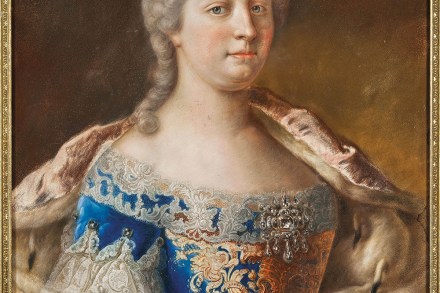
The role of personality and charm in running a state is one theme of Richard Bassett’s superb book, the first English biography of the Empress Maria Theresa since Edward Crankshaw’s in 1969. The different parts of the Habsburg monarchy – Austria, Tyrol, Bohemia, Hungary, Croatia and Milan – had little in common except dynasty, geography and Catholicism. Yet, partly owing to Maria Theresa’s force of character, this complex tapestry of nationalities remained a great power After she came to the throne in 1740, she felt ‘forsaken by the whole world’. Encouraged by France, Austria’s neighbours Prussia, Saxony and Bavaria invaded the monarchy in order to divide it between them. By
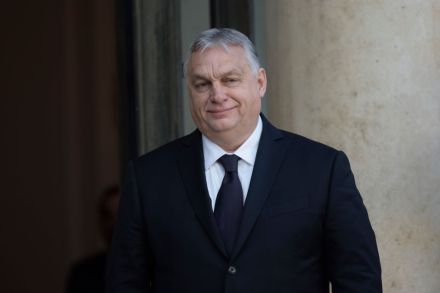
Viktor Orban is not abandoning Europe

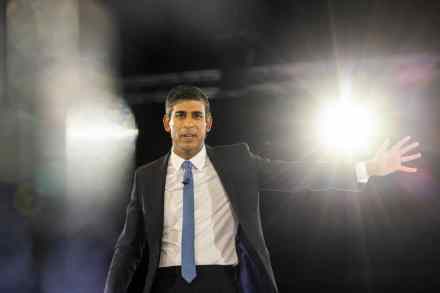
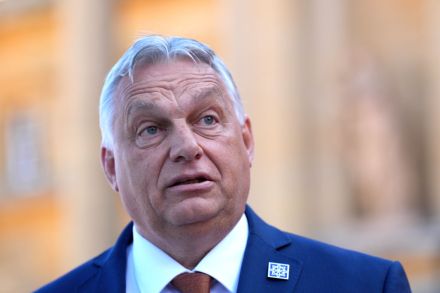
The news that Hungary and China have signed a security pact, following a visit by to Budapest by Wang Xiaohong, Minister of Public Security, has been a long time in the making. In 2012, two years after beginning his second term as Prime Minister, Viktor Orban formally re-orientated Hungary’s economic and foreign policy under the slogan of the ‘Eastern Opening’. Orban understood the frustration that had returned him to power with a two-thirds majority in Parliament. Two decades of integration with western Europe had made plenty of Hungarians prosperous, but not the majority.  The introduction of the free market in Hungary was accompanied by the mass closure of businesses, and

Giorgio Perlasca’s Christmas in wartime Budapest

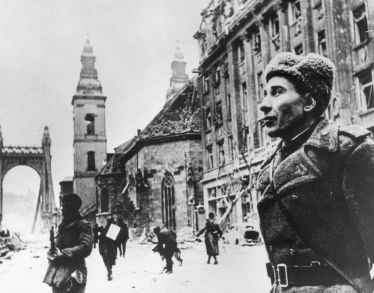
Artillery boomed over the Buda hills, the flashes of explosions slicing through the freezing winter dusk. The crack of rifle fire sounded nearby and the air was thick with the acrid stink of cordite. It was 24 December 1944 and Giorgio Perlasca was trying to get to the Spanish Legation villa to celebrate Christmas. The Hungarian soldiers at the checkpoint said it was not possible to proceed. The Russians were advancing and were now just a few hundred yards away. Perlasca explained that he was a Spanish diplomat and asked again to pass through. The soldiers reluctantly agreed. A few minutes later Perlasca was inside the Legation building. Sixty people

The good soldier Maczek – a war hero betrayed

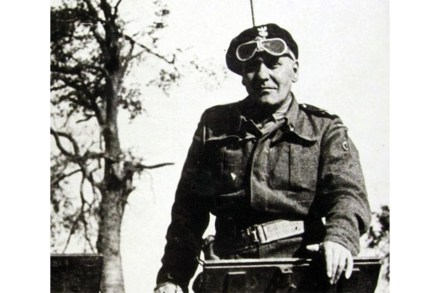
Who could forget the Polish squadrons in RAF Fighter Command when, in the 1969 film The Battle of Britain, a British squadron leader, frustrated by the excited radio chatter on being allowed into action at last, orders ‘Silence! In Polish!’ Or the Polish Parachute Brigade at Arnhem, whose commander, Stanislaw Sosabowski, played by Gene Hackman in A Bridge Too Far (1977), thinking the venture disastrous, growls ‘God Bless Field Marshal Montgomery’ as he jumps from his Dakota? Commander Eugeniusz Plawski, the captain of the Polish destroyer Piorun which first spotted the Bismarck and charged at her to draw fire, might be better known if he had featured in the 1960

The spy who came back from retirement: Karla’s Choice, by Nick Harkaway, reviewed

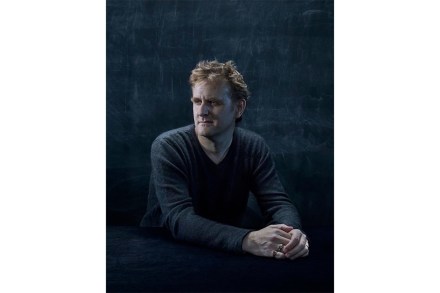
Publishing is a business. Authors are its brands and books its products. When, as sometimes happens, one of the bigger brands inconveniently dies or retires, there’s an understandable desire to keep the brand going and to attach its lucrative name to new products. And why not? If it’s done well, everyone benefits – publishers, readers and authors’ estates. In the past 60 years, there have been few bigger brands than the late John le Carré, so it’s no surprise to find a posthumous outing with the words ‘A John le Carré novel’ plastered over the cover. Its author, Le Carré’s youngest son Nick Harkaway, is a well-established novelist in his

Viktor Orban’s adviser has made a big mistake

This week Balazs Orban, the bespectacled political director to the Hungarian Prime Minister (and of no relation to him), has found himself in trouble after a podcast interview he gave on Wednesday. He seemed to imply that Ukraine should not have resisted the Russian onslaught – and that if Hungary had been in a similar position, it would have given up without a fight.  ‘We probably wouldn’t have done what President Zelensky did two and a half years ago, because it’s irresponsible,’ Orban said. ‘Because obviously he put his country into a war defence, all these people died, all this territory was lost – again, it’s their right, it’s their

Hungary is stretching the EU’s patience to its limit

Hungary is no stranger to spats with its European neighbours. Under prime minister Viktor Orbán’s leadership, it has exercised veto rights to block Ukrainian military aid and Russian sanctions, delayed the Nato accessions of Sweden and Finland and shrugged off EU asylum regulations. For Budapest, the disputes have proven to be effective leverage in unfreezing funds — once €30million (£25 million), now some €22million (£19 million) — held by the Commission over rule of law violations and corruption concerns. For the EU, Hungary is a diplomatic headache – and one that may be about to get worse. When Hungary assumed the bloc’s rotating presidency last month, Orbán flew to Moscow

Remembering the Roma Holocaust, 80 years later

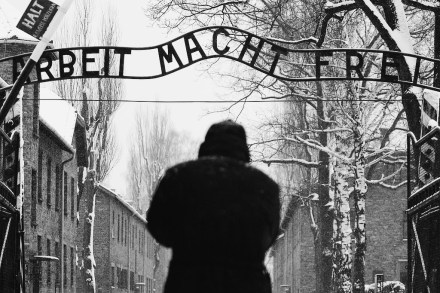
On 16 May, 1944, as the first full trainloads of Hungarian Jews trundled towards Auschwitz, the SS decided to clear out the area known as the ‘Gypsy family camp’ to make room for the new arrivals. The family camp housed several thousand Roma and Sinti (Roma with German roots) people. Like the Jews, they were classified as racially inferior and enemies of the Third Reich. But while Jewish arrivals were immediately removed from their loved ones, Roma families were often allowed to stay together. Their numbers were much smaller and they refused to be separated. Claimant 3102250 finally received the standard compensation for her ordeal That day, the Roma and

The Orban acolyte who became his fiercest critic

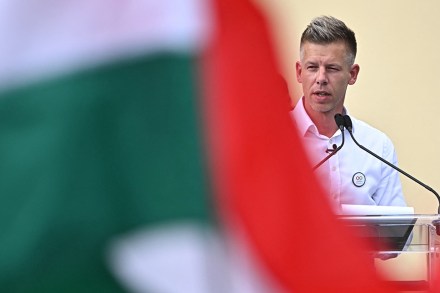
All sorts of people are grateful to Peter Magyar for bounding into the arena of Hungarian public life. Journalists, chiefly. Many a grizzled, lugubrious Hungarian hack had tears of gratitude welling as Magyar demolished the tedium and predictability of Hungarian party politics: Viktor Orban trampling a feeble collection of bunglers and chisellers, known as the opposition, again and again. Of course, the foreign correspondents were even more elated. Vilifying Orban? Step this way for your eulogy and hosannas, you smooth-talking cosmopolitan. Magyar is certainly deserving of attention; he’s fought a remarkable one-man blitzkrieg. In February, no one outside the halls of government knew who he was, and if they did,