Los angeles

The fragility of the modern city reflects humanity’s vulnerability

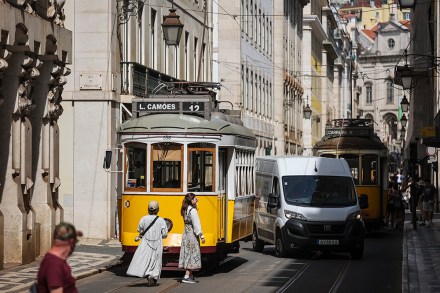
As I reached the final pages of the German writer Gregor Hens’s essayistic travelogue The City and the World, news of the blackout across Spain and Portugal snatched my attention. Madrid and Lisbon were at a standstill. Images of gridlocked round-abouts and commuters rushing out of pitch-dark subway tunnels plunged me into a fatalistic mood. When will it happen here? Hens, I realised, had nailed an important point: the ‘stunning complexity’ of modern cities makes them fragile. The metropolis, he writes, has become so intricate, its limits so stretched, that in it, ‘we are always living on the verge of catastrophe’. A seasoned globetrotter who spent his formative years ‘guzzling
The pursuit of love letters: My Search for Warren Harding, by Robert Plunket, reviewed

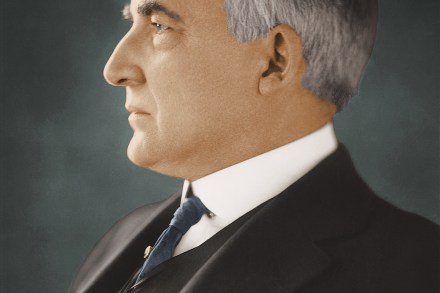
There is something wonderful about a novel being rescued from obscurity. Robert Plunket’s My Search for Warren Harding was first published in 1983, given a few decent reviews and then disappeared. Occasionally admirers – including rather influential ones like Amy Sedaris and Larry David – would lend a weathered copy to friends, insisting they read it. And so here we are. Elliot Weiner, a third-rate academic (in fact the word ‘academic’ barely seems to apply), hears that Rebekah Kinney, a former mistress of Warren G. Harding, president of the United States from 1921 to 1923, is living in a decrepit mansion in Los Angeles. Weiner specialises in Harding, largely because

The unfulfilled life: Ask Me Again, by Clare Sestanovich, reviewed

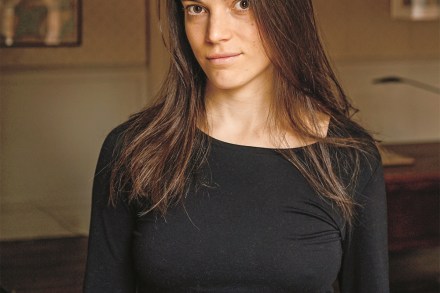
Eva, the protagonist of Clare Sestanovich’s debut novel, is a young woman struggling to find her place in the world. Over an unspecified period, anchored by references to the Occupy Wall Street movement and Donald Trump’s first election victory, we follow her from her adolescence in Brooklyn, through friendships and heartbreak at an ‘excellent college’, to journalism in Washington and nannying in Los Angeles. Despite her probing of everything (it’s no accident that all the chapter headings are questions), Eva receives few answers and doesn’t follow the usual bildungsroman path of self-discovery. Although Sestanovich touches on matters of moment – a pastor caught with child pornography; a deadly warehouse fire;

Saint Joan and saucy Eve: a single woman split in two

Fresh out of Hollywood High, Eve Babitz introduced herself to Joseph Heller: ‘Dear Joseph Heller, I am a stacked 18-year-old blonde on Sunset Boulevard. I am also a writer.’ It was 1960, and while her writing was the sheerest bliss, ‘Eve Bah-Bitz with the Great Big Tits’, as she was known, was herself a work of art. Beauty, she learned at school, was power and ‘the usual bastions of power are powerless when confronted by beauty’. So it was her stack (36 DD) that opened doors for her until, in 1972, her friend Joan Didion told Rolling Stone magazine to publish Eve’s first story, ‘The Sheik’. That same year, Didion

Her weird name was the least of Moon Unit Zappa’s problems

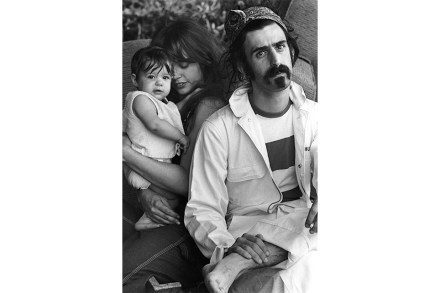
On Frank Zappa’s first date with Gail Sloatman, he blew his nose on her skirt. As acts of territory-marking go, it’s hard to imagine something more equivocal. But Gail, a 20-year-old secretary at Los Angeles’s Whisky a Go Go club, must have read it as love. She built her life around the musician, composer and ‘rock’s most committed iconoclast’, as his New York Times obituary described him, for 27 years, until his death from prostate cancer in 1993, aged 52. A year after that first, snot-filled seduction, the Zappas were married, a week before Gail gave birth to Moon Unit, the first of four children. Moon’s name is not a

An insight into the American Dream: Table for Two, by Amor Towles, reviewed

Amor Towles was a Wall Street banker before he published his first novel, Rules of Civility, in 2011, at the age of 46. Since then, his books have sold six million copies, and the second, A Gentleman in Moscow (2016), has been made into a Paramount + series starring Ewan McGregor. Towles’s success in banking and publishing has perhaps given him a particular insight into the American Dream. The six stories and one novella that make up his stylish and confident new collection, Table for Two, all feature characters in pursuit of an ambition that puts them in varying degrees of peril – protagonists tasked with missions of differing seriousness.

No longer the tough guy

Only to Sleep is the third Philip Marlowe novel written by someone other than Raymond Chandler and while the authors of Perchance to Dream and The Black-Eyed Blonde both found freedom to play with Marlowe and explore his potential, it is Lawrence Osborne who has run the furthest with the source material. The novel opens in 1988, with Marlowe living in retirement in Baja, Mexico. He is 72, and enjoying a leisurely life in the sun, when he is asked to take on one last investigation into insurance fraud. A Reagan-era Marlowe unlocks an aspect that Chandler never considered. His Marlowe was ageless (he wrote that the detective was around

Evil under the sun

When James Ellroy’s L.A. Confidential appeared in 1990, it introduced us to a world of blatant corruption, casual racism and routine police brutality that, a year before anybody ever heard of Rodney King, might have seemed fanciful to some. Set in the early 1950s, the novel was a landmark in neo-noir writing, in which historical detail mingled with pacy fiction to conjure up a city that was both highly glamorous and rotten to the core. At the same time, Ellroy’s staccato, near-telegraphic prose drove the action relentlessly onwards, with an urgency that seemed designed to swamp not just the reader but also the protagonists themselves with noise, movement and a

Restless visionary: Man Ray was always ahead of his time

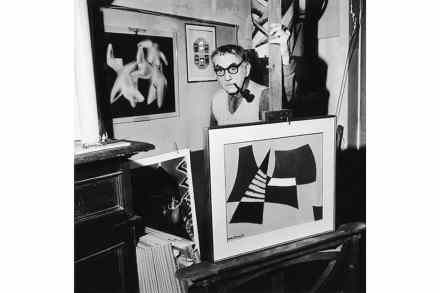
In the summer of 1940, after almost 20 years in Paris, Man Ray fled the Nazis for the country of his birth. Disliking New York, where he’d spent his youth, he made for the West Coast. He hoped to get as far as Tahiti or Hawaii. But his trip came to an end when, braced by the space, lifted by the lack of skyscrapers (‘made me feel taller’) and swept off his feet by a dancing girl (the latest in a long line of hoofers for whom he’d have the hots), he settled in Los Angeles. Though he would live there for more than decade, he never really liked the

Startlingly sadistic: Once Upon a Time in Hollywood, by Quentin Tarantino, reviewed

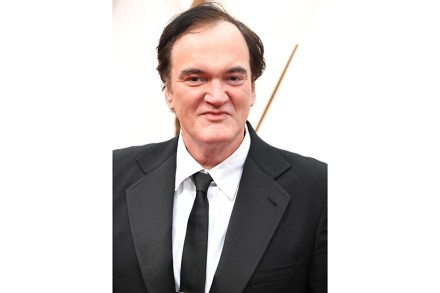
There’s no doubt that Quentin Tarantino is a movie director of brilliance, if not genius. But can he write? Well he can certainly tell a good story. What we have here is Tarantino’s ninth feature film, a 1960s Hollywood yarn about a fictional actor and his stunt double, but rendered in book form. Rick Dalton is the TV and B-movie actor, while his stuntman, Cliff Booth, ruined his own career by beating up Bruce Lee during a shoot. He’s now reduced to being Rick’s driver and drinking buddy. The two of them are on the slide, but things start to look up when Rick lands a role in a new

Life’s a bitch: Animal, by Lisa Taddeo, reviewed

Lisa Taddeo’s debut Three Women was touted as groundbreaking. In reality it was a limp, occasionally overwritten account of the sexual hang-ups of three ordinary women. It took eight years to research and write. It didn’t seem worth it. Luckily, she was also gathering material for a novel, Animal, a book teeming with the rage, frustration and drama so lacking in the debut. The same motifs and ideas —mothers, desire, shame — appear, but with a story that twists and turns. Animal is the first-person account of Joan, a slightly unhinged 37-year-old woman: ‘I am depraved. I hope you like me.’ She leaves New York after her former lover shoots

Exploring walkable Los Angeles

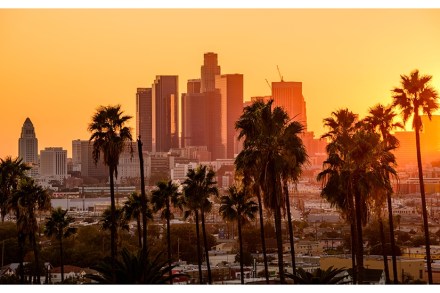
‘You’re going where? Why? No. No you’re not! On your own?’ This was not the response I’d hoped for when I mentioned to my friend and colleague Mary Wakefield where I planned to go on holiday. ‘What’s wrong with downtown LA?’ I asked. She said: ‘Last time I was there I saw a man stabbed in the public loo.’ I’m no snowflake, but as I touched down in LAX I had visions of corpses piled up on the sidewalk. I needn’t have worried. Mary was last here more than a decade ago and, as I discovered from the moment I left the airport, modern technology has transformed the tourist experience

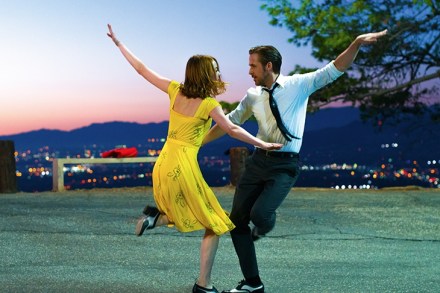
Ga Ga Land

Los Angeles stinks. Not just of the usual things: sex, money, suntan oil, hipster food, surfer wax — odours that I like. There’s a new whiff in town, and it’s a bad one. Weed. The smell of marijuana hangs over LA like an invisible menace. It’s an omnipresent fug. To walk from one end of a street to the other, whether it’s along the chaotic Hollywood Boulevard or the half-gentrified, half-terrifying Broadway in downtown LA, is to risk developing a skunk habit. I swear I almost got high popping out for a bottle of Dr Pepper. It’s such an awful smell. It’s the smell of a Nietzsche-reading teenager’s bedroom, the