Taliban

Stray shells and suicide bombers in Kabul’s finest hotel

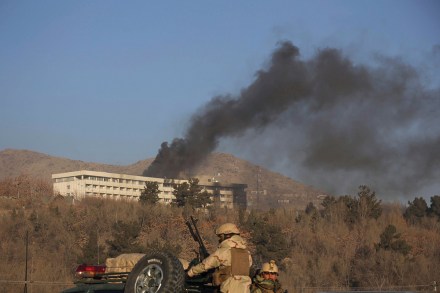
No one who flies into Afghanistan’s capital is left indifferent. In one of the many deftly drawn scenes in The Finest Hotel in Kabul, Lyse Doucet describes a snowy Hindu Kush on the skyline, the packed homes of the poor on the brown hills, a steep corkscrew descent carried out while firing flares, ‘bursting outward with white-hot fire’ to avoid missiles. Once safely on the ground, she decides to make her way to Kabul’s Intercontinental Hotel, drawn by ‘better telephone and telex links, food worth eating and a certain faded splendour’. Doucet, a deservedly respected journalist who is now the BBC’s chief international correspondent, made that first trip in the
The truth about grooming gangs, ‘why I’m voting for the AfD’ & exploring YouTube rabbit holes

47 min listen

This week: what does justice look like for the victims of the grooming gangs?In the cover piece for the magazine, Douglas Murray writes about the conspiracy of silence on the grooming gangs and offers his view on what justice should look like for the perpetrators. He also encourages the government to take a step back and consider its own failings. He writes: ‘If any government or political party wants to do something about the scandal, they will need to stop reviewing and start acting. Where to begin? One good starting point would be to work out why Pakistani rapists in Britain seem to have more rights than their victims.’ To

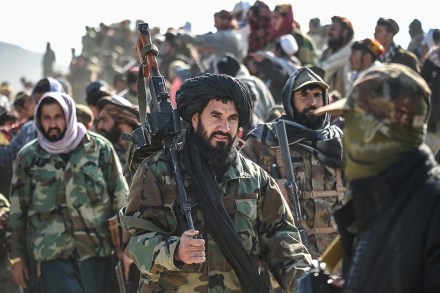
America’s new ally in the battle against Isis: the Taliban

Isis are back. In fact, to borrow Gerry Adams’s remark about the IRA, they never went away. Now, they are regaining some of their previous strength in Syria and Iraq, and moving into fresh territory in Africa. Of most importance to the West, the Afghan branch of Isis – Isis Khorasan – is said to be plotting more direct attacks on the ‘far enemy’, as well as pumping out propaganda to create so-called ‘lone wolves’. But with the stakes rising, it seems the United States may have found a new ally in the battle against Isis: the Taliban. The enemy of my enemy… Intelligence also flows the other way, with

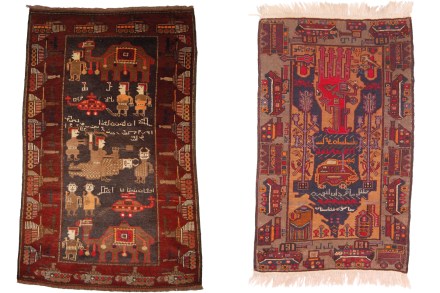
Sad but beautiful exhibition of Afghanistan’s war rugs

Decades after its inclusion in the Hippie Trail, Afghanistan is again open to tourism, according to the Taliban’s spokesman Zabihullah Mujahid. It is perhaps a source of regret for the group that the 6th-century Buddhas of Bamiyan are missing in action. They were blown up in 2001 either, depending on who you ask, because of Islam’s strict beliefs on anti-idolatry or to punish the West for offering money to preserve them rather than give aid to starving children. The war rugs, depicting camels and flowers alongside rocket launchers, are striking and jarring While the country continues to export fruit, nuts and insect resins – opium production was massively scaled back

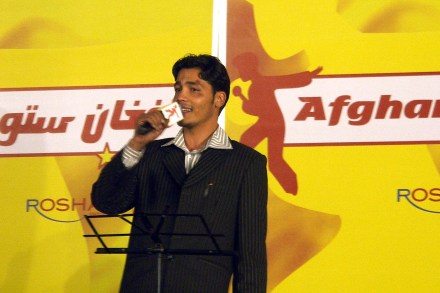
Under the Taliban, Afghan light entertainment accrued unusual weight

For a television talent show, Afghan Star had unusually high stakes. When it first hit Afghanistan’s screens in 2005, four years after the fall of the Taliban, it represented the triumph of music over those who had attempted to smother it. Even from the show’s somewhat chaotic inception, it galvanised a nation, sending supporters out on to the streets to canvas for their favourite performers. When the Taliban first swept into town, people were overjoyed: they were seen as ‘angels of peace’ The first winner, Shakib Hamdard, certainly deserved some luck: he had lost his father to a suicide bomb and his brother to a rocket attack, and was driving

Ahmad Massoud: ‘I’m 100% sure I can topple the Taliban’

It’s fighting season in Afghanistan again. When the Americans were in charge, after the poppy fields had been harvested in late spring, and the madrassas in Pakistan that supplied the Taliban with fanatical soldiers had finished for the term, the Islamists kicked off the fighting. Between 2001 and 2021, around 200,000 people died, including 453 Britons. Now an insurgent group called the National Resistance Front (NRF) are starting the annual springtime assaults, this time against the Taliban government. ‘The Taliban do not possess the support of the mass of the people. We do’ ‘In the past 31 days, we have staged 31 attacks on Taliban, only in Kabul,’ Ahmad Massoud,